 Ambulance No : +91 99987 92676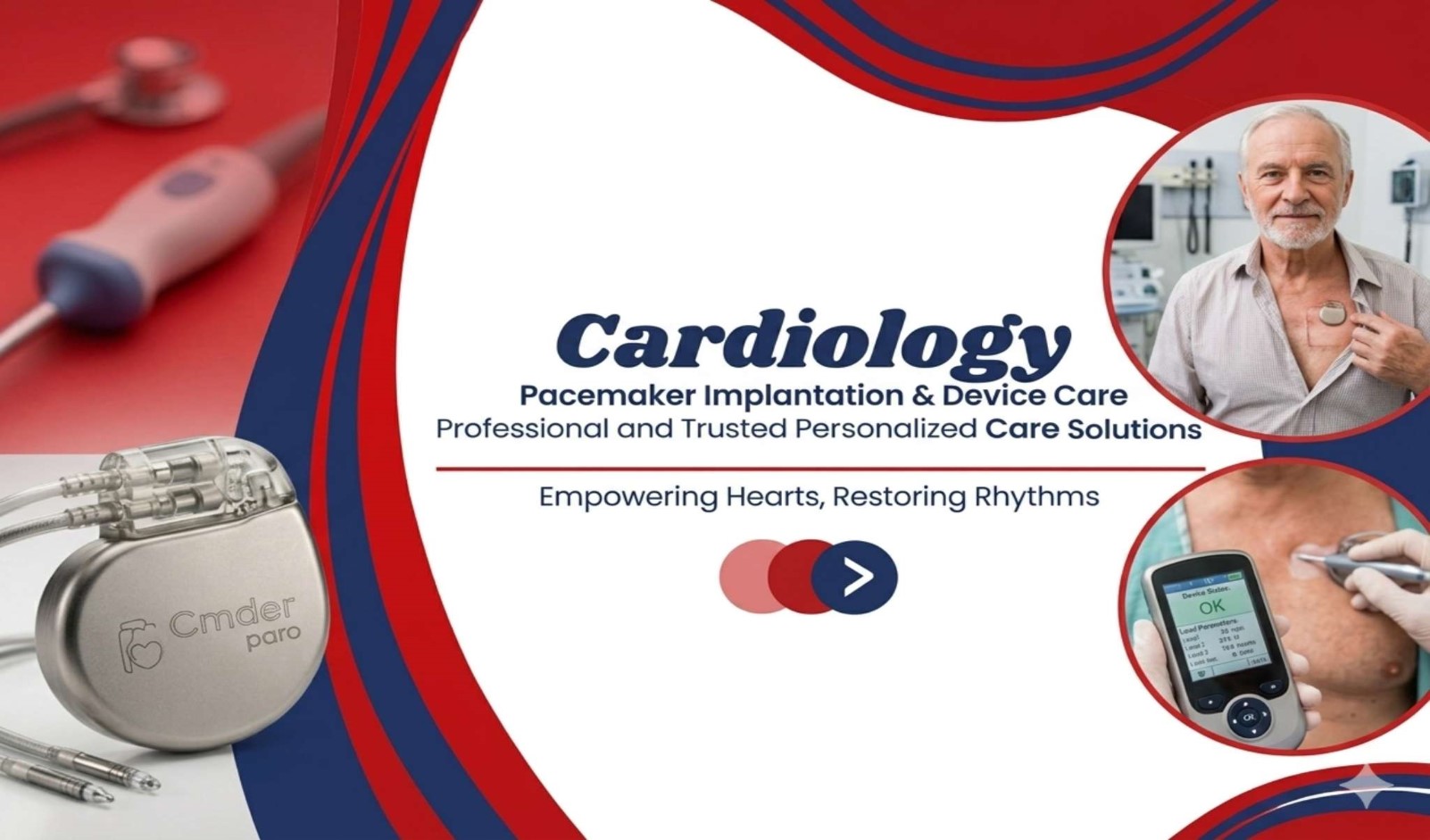
Cardiology – Pacemaker Implant
Our Cardiology Department offers comprehensive heart care with advanced diagnostic and therapeutic services for the prevention, diagnosis, and treatment of cardiovascular diseases. We are committed to providing accurate evaluations and personalized care using modern technology and evidence-based practices.
ECG (Electrocardiogram): An Electrocardiogram (ECG) is a simple, quick, and painless test that records the electrical activity of the heart. It helps diagnose irregular heart rhythms (arrhythmias), heart attacks, conduction abnormalities, and other cardiac conditions. ECG is commonly used for routine health check-ups, emergency cardiac evaluation, and monitoring patients with known heart diseases.
2D Echo (2D Echocardiography): A 2D Echo is a non-invasive ultrasound scan that provides real-time images of the heart's structure and function. It helps assess heart chamber size, pumping efficiency (ejection fraction), heart valve disorders, congenital heart defects, and blood flow through the heart using Doppler imaging. It is an essential tool for diagnosing and monitoring various cardiac diseases.
TMT (Treadmill Test): The Treadmill Test, also known as an Exercise Stress Test, evaluates how the heart performs during physical activity. While the patient walks on a treadmill, heart rate, blood pressure, and ECG are continuously monitored. This test helps detect coronary artery disease, exercise-induced chest pain, abnormal heart rhythms, and assesses exercise capacity and overall cardiovascular fitness.
ABPM (Ambulatory Blood Pressure Monitoring): Ambulatory Blood Pressure Monitoring is a 24-hour blood pressure recording performed using a portable device worn during normal daily activities and sleep. It provides a comprehensive assessment of blood pressure fluctuations, helping diagnose hypertension, white-coat hypertension, masked hypertension, and evaluate the effectiveness of blood pressure medications.
Holter Monitoring: Holter Monitoring is a continuous ECG recording, typically performed over 24 to 72 hours, while the patient carries out routine daily activities. It is useful for detecting intermittent arrhythmias, palpitations, unexplained dizziness, fainting episodes, silent ischemia, and other heart rhythm abnormalities that may not appear during a standard ECG.
Temporary Pacemaker Implantation: Temporary Pacemaker Implantation is a specialized procedure used to stabilize patients experiencing dangerously slow heart rhythms (bradycardia) or heart block. A temporary pacemaker provides electrical stimulation to maintain an adequate heart rate until the underlying condition improves or a permanent pacemaker can be implanted. This procedure is commonly performed in emergency situations and after certain cardiac procedures.
Cardiac Stress 2D Echo (Stress Echocardiography): Stress Echocardiography combines echocardiography with exercise or medication-induced stress to evaluate heart function under increased workload. It helps identify reduced blood flow due to blocked coronary arteries, assess heart muscle function, evaluate chest pain, detect ischemia, and determine the severity of valve diseases or other cardiac conditions.
TEE (Transesophageal Echocardiography): Transesophageal Echocardiography (TEE) is an advanced ultrasound examination performed by passing a specialized probe into the esophagus to obtain highly detailed images of the heart. It provides superior visualization of heart valves, blood clots, congenital heart defects, infections of the heart valves (endocarditis), and other complex cardiac conditions. TEE is also widely used to guide various cardiac procedures and surgeries with greater precision.