
 Ambulance No : +91 99987 92676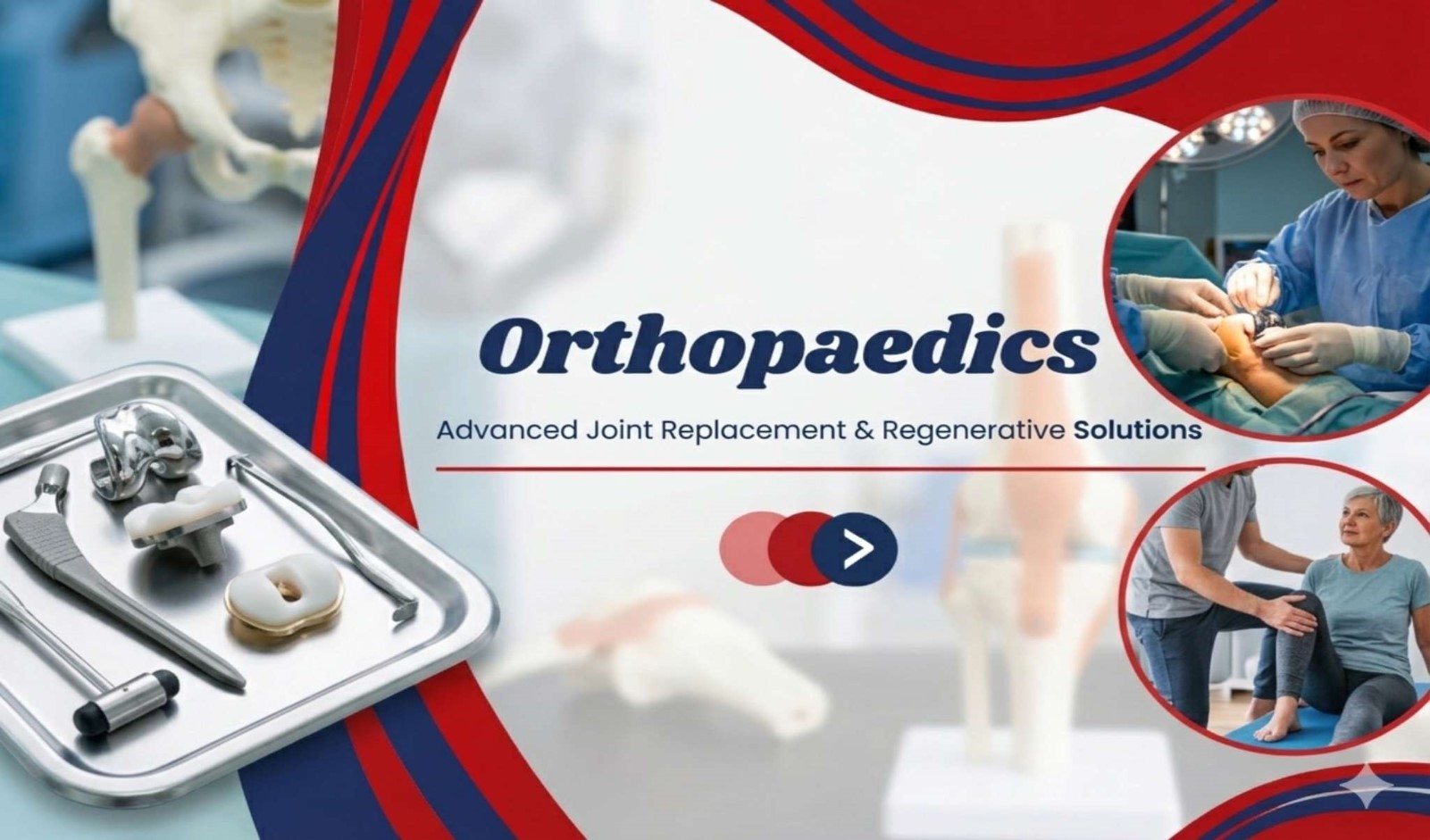
Orthopaedics – Joint Replacement
Orthopaedics is a branch of medicine that focuses on the diagnosis, treatment, and prevention of disorders related to the musculoskeletal system, which includes bones, joints, ligaments, tendons, and muscles. One of the most important and advanced areas within orthopaedics is joint replacement surgery, also known as arthroplasty. This procedure is performed to relieve pain and restore function in severely damaged joints, most commonly affected by conditions such as osteoarthritis, rheumatoid arthritis, trauma, or degenerative changes due to aging.
Joint replacement involves removing the damaged or worn-out parts of a joint and replacing them with artificial components called prostheses. These prosthetic parts are typically made from durable materials such as metal alloys, ceramics, or high-grade plastics, designed to mimic the natural movement of the joint. The most commonly replaced joints are the knee and hip, though shoulder, elbow, and ankle replacements are also performed when necessary.
The procedure can be classified into total joint replacement, where the entire joint is replaced, and partial joint replacement, where only the damaged portion is replaced. Advances in surgical techniques have led to minimally invasive approaches, which involve smaller incisions, reduced tissue damage, less postoperative pain, and faster recovery times. Technologies such as computer-assisted surgery and robotic-assisted systems have further improved the accuracy and outcomes of joint replacement procedures.
Before surgery, patients undergo a thorough evaluation that includes physical examination, imaging studies like X-rays or MRI, and assessment of overall health to ensure they are fit for surgery. Postoperative care is equally important and includes pain management, wound care, and a structured rehabilitation program involving physiotherapy. Exercises such as physical therapy exercises help restore mobility, strengthen muscles, and improve joint function.
Joint replacement surgery has a high success rate and significantly improves quality of life by reducing pain and enhancing mobility. However, like any surgical procedure, it carries potential risks such as infection, blood clots, implant wear, or dislocation. With proper care, modern joint implants can last 15–25 years or more, depending on factors like activity level and overall health.
Orthopaedic joint replacement is a highly effective and life-changing treatment for patients suffering from severe joint damage, combining surgical expertise, advanced technology, and rehabilitation to restore movement and independence.