 Ambulance No : +91 99987 92676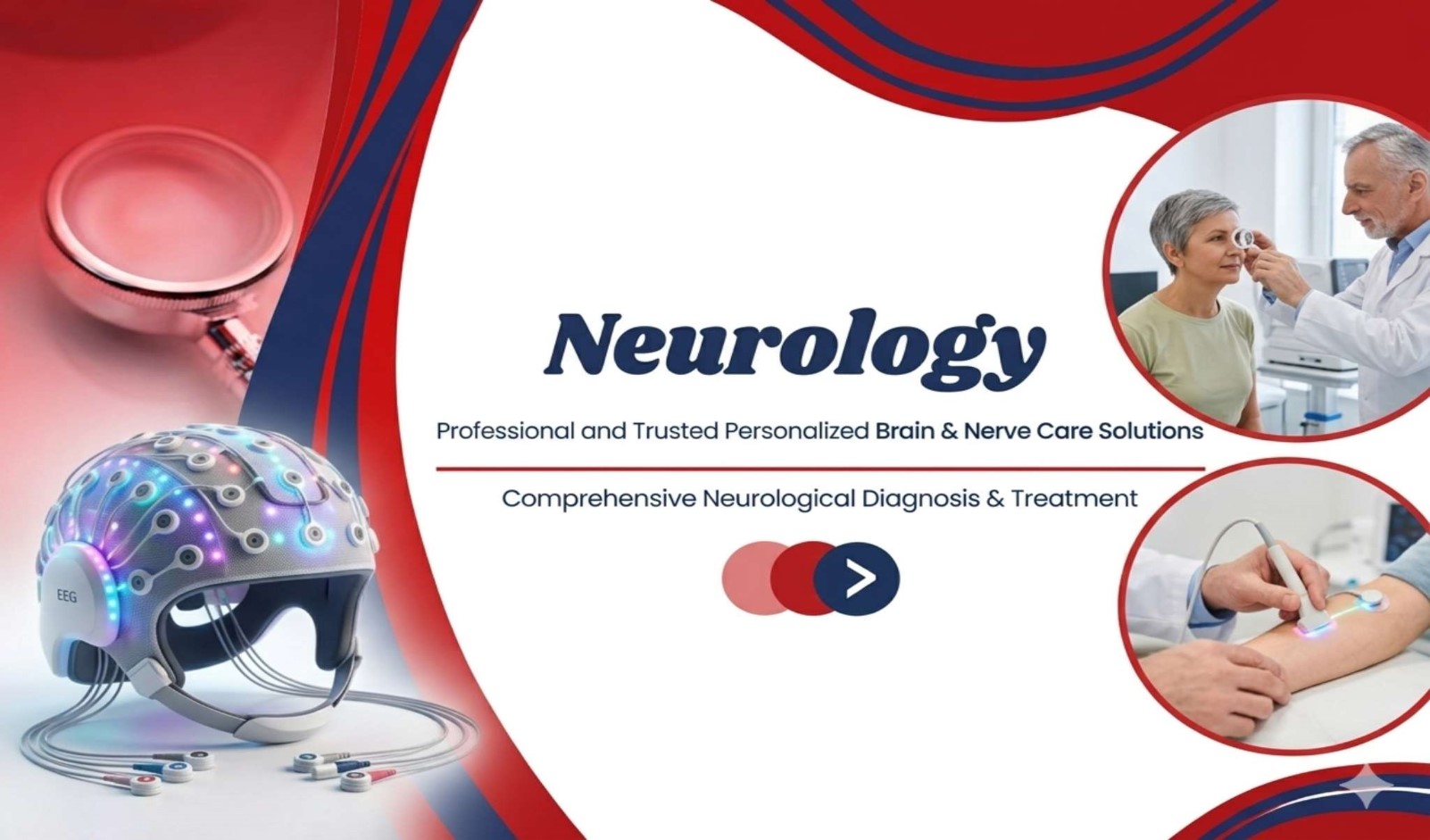
Neurology
Our Neurology Department provides comprehensive evaluation, diagnosis, and management of disorders affecting the brain, spinal cord, nerves, and muscles. With advanced diagnostic facilities and expert neurological care, we are committed to delivering accurate diagnoses and personalized treatment plans for a wide range of neurological conditions, including stroke, epilepsy, headaches, Parkinson's disease, neuropathies, movement disorders, memory disorders, and other neurological illnesses.
MRI (Magnetic Resonance Imaging): MRI is an advanced, non-invasive imaging technique that uses a powerful magnetic field and radio waves to produce highly detailed images of the brain, spinal cord, and nervous system without using radiation. It plays a vital role in diagnosing conditions such as stroke, brain tumors, multiple sclerosis, epilepsy, spinal disorders, nerve compression, brain infections, congenital abnormalities, and degenerative neurological diseases. MRI provides exceptional soft tissue detail, enabling early diagnosis and effective treatment planning.
CT Scan (Available at Our Affiliated Imaging Center): Computed Tomography (CT) Scan is a fast and accurate imaging test that uses X-rays to create detailed cross-sectional images of the brain and spine. It is especially valuable in emergency situations for the rapid diagnosis of stroke, brain hemorrhage, head injuries, skull fractures, brain tumors, hydrocephalus, and other neurological emergencies. Through our trusted affiliated imaging center, patients receive prompt access to high-quality CT imaging with timely reporting for effective clinical decision-making.
Specialized Neurological Tests: We offer a range of specialized neurological diagnostic tests to evaluate the function of the brain, spinal cord, peripheral nerves, and muscles. These investigations help diagnose conditions such as peripheral neuropathy, muscle disorders, epilepsy, neuromuscular diseases, and nerve injuries. Depending on the patient's condition, tests may include Nerve Conduction Studies (NCS), Electromyography (EMG), Electroencephalography (EEG), Evoked Potential Studies, and other advanced neurological assessments. These tests support accurate diagnosis, monitor disease progression, and assist in planning the most appropriate treatment and rehabilitation strategies.